
Category: Longform
You are viewing all posts from this category, beginning with the most recent.
Live by the attention economy, die by the attention economy.
Attention is one of the most valuable resources around [ˆ1].
Tech giant compete for even more ways to grab our attention, and content creators now hire dedicated thumbnail creators to increase their click through rates and so ensure their profitability.
I’m sure you’ve experienced a moment, probably in the last week, maybe in the last day, where you felt your button’s being pushed. Something that either deliberately made you angry, or vague so it made you curious. If I’m honest, it’s something I think about all the time in the writing I do (although i’m trying not to fall into that trap sometimes). In fact, on my walk this morning I saw my local Indian restaurant is closing down…so it can move to a new bigger location. That sentence is a perfect example of this kind of “tension, release” type writing.
Sometimes it’s just plain clickbait, other times it’s not deceptive, but still manipulates your emotions — like my previous example.
This situation presents us all with a dilemma.
Do we use the one ring?
In the fellowship of the rings, the council of Elrond has a dilemma; use the one ring against Sauron, or not.
Knowing the end of the Lord of the Rings, it’s obvious they shouldn’t, but from their position, it’s not clear. It is a great weapon, filled with great power, it could help them defeat their enemy.
In the end, they have the wisdom to not use the weapon and destroy it.
In real life we rarely make this choice. Instead we decide that we are the noble and right ones, therefore it’s okay for US to use this power (but they are bad and evil and so it would be wrong for them to).
Going against this logic is naïve.
In many situations it means we lose and they win, and that can mean real suffering. However, the example of the one ring should remain with us. We can win but in fact lose. By using the ring, we can become the same thing we hate.
True wisdom involves knowing when it is right to compromise on some values for other ones; fake wisdom abandons all principles for power instantly.
So what about attention?
Respecting other people’s attention
What if we treated each others attention with respect? If we used some of the principles of being “attention grabbing” to be clear and informative without hijacking people’s focus.
In generally I think this means we should avoid inflammatory language and above all make people not feel tricked.
Don’t validate the attention mongers
Today I saw a thumbnail for a video of “essential” tools.
In the thumbnail there was a pair of AirPod Maxes.
I felt that inflammatory reaction and wanted to watch the video and leave an angry reply about how they couldn’t possibly “essential” and even headphones weren’t.
But I stopped (this time).
Thousands of others didn’t (judging by the views), but the more of us who resist, the better for the internet it will be.
[ˆ1]: Judging by current stock prices, perhaps compute power is the most valuable resource right now?
Being the (blogging) change I want to see
I love Micro blog. I’m not sure why exactly, but it always feels like a nice place to go on the internet. I’ve met great people there whom I’ve then met in real life and exchanged gifts with. I’ve been challenged by different perspectives, and grown from people further along the path than I am.
It’s my favourite social network.
But I feel it’s changed over time[ˆ1] and I want to push against that.
A return to blogging
There’s nothing wrong with microblog post, but there’s something special about a blog post.
Someone taking the time to give a post a title transforms the fleeting thought into a codified idea takes time to create and consume properly. It’s so easy to gravitate to shorter, louder and reductive content that gives quicker rewards.
But when I spent time indulging in richer and longer content, I always feel the better for it.
So, I’m trying to be the change I want to see.
More blogs next year
For next year, I’m committing to share more longer form posts.
I’ve had several posts in the back burner or half drafted, this year I’m going to do better at finishing things off (or not let a technical issue stop me from publishing!).
I don’t know exactly what these posts will be on, but we’ll see.
Just longer blogs?
Nope, I also want to share more links of great content that I’ve found as well.
It was something I did a lot in the early days of Micro.Blog but I fell out of the habit of doing.
Burning the Ships
A final change I’m making is closing down a couple of old sites.
I had a personal site which I started more than 12 years ago. It started as very general thoughts, became street photography focused and now lies neglected (but still makes some Amazon affiliate link money).
So I’m merging it with my micro.blog account.
Hello 2025
I’m sure some plans will change in 2025, but these are my current plans.
I can’t wait to see what you share too.
[ˆ1]: This is 100% subjective. I’m aware of evidence against this including the name of the site.
So I have a drone...(yes, I have pictures and a video)
When I was a kid, I would go to the model shop every month or two. I looked at the remote control cars, planes and helicopters with great envy and usually came home with only a humble model plane to my name.
So when drones first became mass market, It felt like my childhood dream was finally within reach. And yet I waited. I didn’t have masses of disposable income and when an opportunity to get one did come up, there was always a better thing to buy.
Until this winter. Now, thanks to some vouchers for performance from work and the benefits of a tax write off combined with Black Friday sales I am the owner of a DJI Mini 4k, the cheapest drone around.

The Mini 4k
Why this drone? Well, it’s simple.
I know and trust the DJI brand (not perfect, but good enough).
I did wonder about their even cheaper NEO which has some pros (can be used without a remote, cheaper to start with, can do FPV too) but some big downsides too. The phone and handsfree modes have very limited distance, and when you add a remote, it’s more than the mini 4k.

So I went for the mini 4k without the fly more combo (mistake! I already want more batteries so i can have longer flights. I’m also envious of the mini 3 which can do vertical video and you can get a remote with a screen built in).
But even with the benefit of hindsight, I think this was probably the best decision I could have made with the information I knew at the time.
You could have told me all the points I’d made but it would probably have made me not get anything. So here are a few things I wish I had considered before getting my drone.
Get a micro SD card and a landing/launch pad
I had an old Micro SD card from back when I had an android phone (Yes, it’s been a while!) but I soon found problems. The write speed of those old cards just isn’t enough for 4k video.
Luckily, getting a 4x larger card with a faster write speed costs 10X less than what I paid back then! Still, I wish I had ordered one when I got the drone.

Similarly, I didn’t know about what you need/should have to launch and land a drone. While you can in theory launch from any old surface, it’s not a good idea and drones certainly don’t want to land on uneven dirt.
Enter a landing pad! A flat and bright surface to help launch and land your drone.
Most of my early expeditions have been at urban and concreted locations so I haven’t NEEDED a landing pad, I’m still planning to get one for more grassy launches.
Will the novelty wear off
Yes, I’m sure it will.
Novelty ALWAYS wears off, but sometimes function, enjoyment and satisfaction fill its place. I’m hoping that will be the case here but I’m aware that it will most likely become like my photography hobby — something I indulge occasionally but don’t regularly pursue.
Still, for the moment I’m enjoying the drone and it is making me look to go out more.
Two theological topics I think would be be interesting to explore (and someone must have already)
At some point I will be writing a masters thesis on Biblical studies through my part time program (I’m taking a year off right now). So I’m thinking of questions that would be interesting to ask and answer in preparation.
1. Henry VIII’s faith.
He was such a defendant of the Roman Catholic Church and then changed. Was it simply so he could get divorced or were their hints before/theology trends that continued (and maybe influence Anglicanism today?)
2. Jesus receiving the covenant blessings (and curses?)
If Jesus fulfills the mosaic covenant, he should receive the blessings of that covenant (and those who are “in Christ” should receive them too) It would be interesting to go through each stipulation and blessing in turn and how they are fulfilled. Conversely, if he took the curses in our place, then we should be able to see that?
Bonus: Abiding in Christ
This is one I’ve been reflecting on as a devotional topic. I took every verse on abiding in Christ, put them in obsidian and have been grouping them, looking at the reasons why, the statements how, etc. I think someone has probably really covered this but i
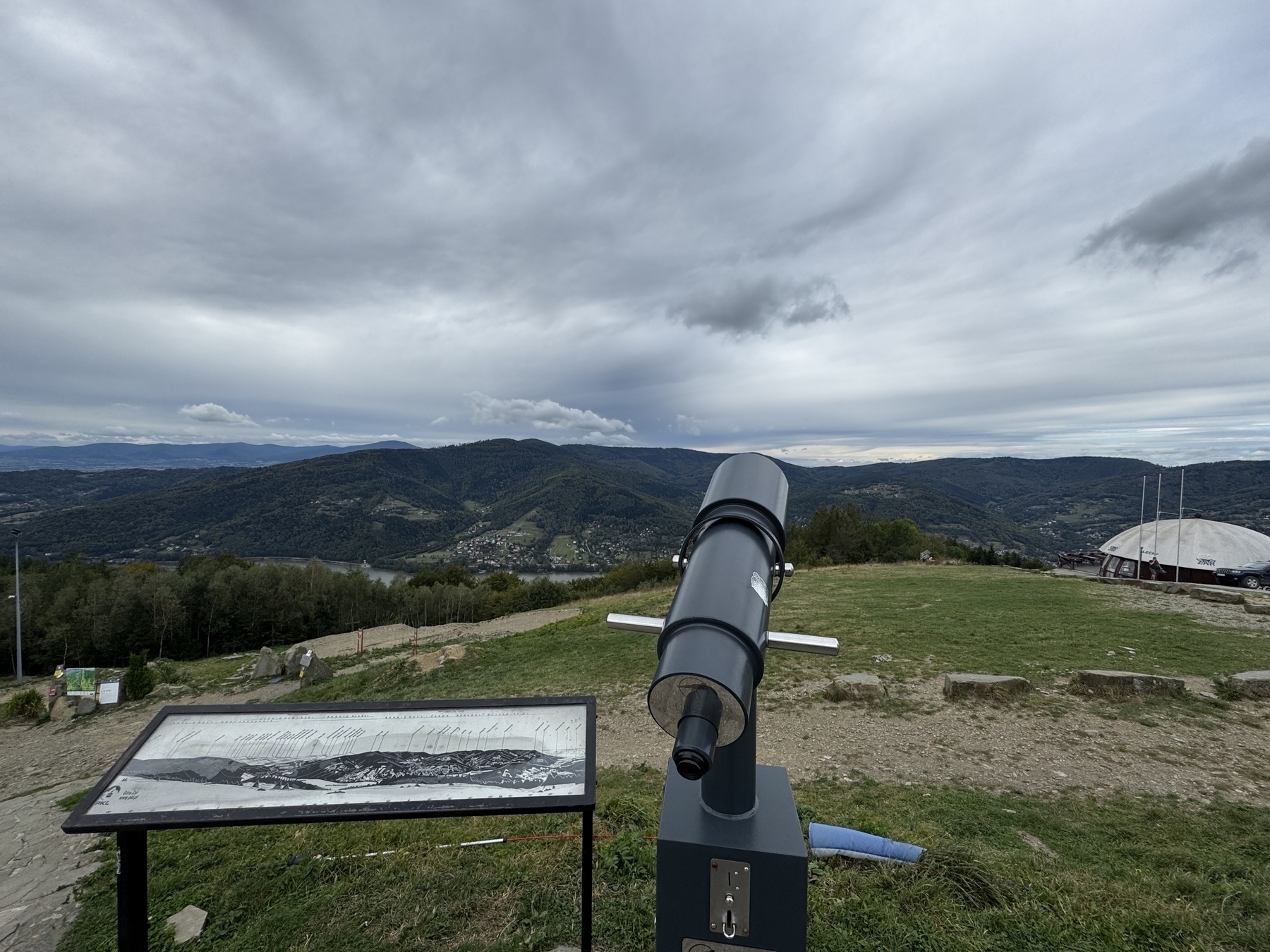
Back from Szczyrk - Polish mountain town
I spent the last week with my family down in a Polish mountain village going on walks, enjoying hearty food and making ample use of the Hotel pool and playroom. It wasn’t easy at times with two small rooms which meant we had to spend our evenings in the dark once the kids were asleep, but it was well worth it. And not bringing any work or projects with me was absolutely the right idea. I’m well rested which is exactly what I needed.





Toys my kids use more than once
One of my kids had a very specific request for her birthday.
A giant toy connected to their favourite cartoon of the moment. I was hesitant — we don’t have that much space and already have a couple of really large toys (that for me at least are just annoying) — but we relented and sure enough a giant Gabby’s Dollyhouse arrived complete with set of figures.
Before it arrived, my wife had noted that this gigantic plaything wasn’t complete. In fact, it’s a modular toy so you can add more rooms and areas on to it — oh. Joy.
But, here we are a month later and my daughter recently exclaimed their frustration at the toy.
- It’s too big
- It’s not like real thing
- it’s stupid (her words, not mine).
And so, she isn’t playing with it much. To be clear, she does still play with it, but she’s also suggested selling it (we regularly sell our old kids old toys and they can then use that money to buy new ones).
It made me think about some of the toys we’re had recently that they’ve used consistently and still enjoy.
- Bikes
- Roller blades
- swimming goggles
- A paper zine with printing out pictures they chose.
It seems that the more active, involved and self created things are those they love the most. And, of course, they are far cheaper too.
It’s not just kids
Of course, it’s not just my kids but me too.
Many of the cool gadgets I think will make me happy I grow out of quickly. But the things that get me out and about or tools to create things are the things that bring me ongoing enjoyment.
I’d bet you’re similar.
The irony of Tim Keller's winsomeness that his detractors will never get
An irony of Tim Keller’s winsomeness — he never rested in his power to convert.
Yes, he studied and used his intellect to present arguments for God and theology, but I always sensed a humility where he didn’t try to force his faith.
“Here it is. It is good.”
Is the posture I always got from him. And he believed it.
In the last few days, I’ve (unfortunately) caught some of his detractors again complaining about his “winsomeness” approach1.
The main criticism I’ve heard is “he should have been more forceful!” That usually means he should have insulted or belittled his opponents, he should have campaigned politically on their top issues, or, as I read yesterday, he didn’t change the politics of New York so he was a failure.
All of which come back to trusting in our own strength to achieve a goal, rely on ends justifying the means and usually **come from insecurities that their ideas aren’t actually good or persuasive **but have to be forced upon people instead.
My church is doing a series on Evangelism at the moment and one of the themes four preacher (all of who haven’t known what the other would preach) have touched on is faithfulness and trusting God rather than resting in our strength or skill.
I wonder what that does to the culture war stuff?
I am certain it let’s speak confidently on issues that are “progressive” or “conservative” without fear of repercussion 2. And, although there will be exceptions who imbue impure motives, lets the listener see the honest conviction of the speaker rather than see the demon they fear is underneath.
Keller wasn’t perfect, but I’d certainly rather adopt his posture and rely on God’s power than try it on my own.
Camera decision fatigue
I’ve got a few camera options
- iPhone
- Ricoh GR (10+ year point and shoot)
- Olympus Mju ii (pocket film camera)
- Hassleblad 500c
- Nikon z50
The recent bout of new film cameras has given me a desire to hit the streets with my Olympus again, but I suspect I’ll end up just taking my iPhone for the same reason I normally do.
Camera decision fatigue
Here’s how my typical thought process looks.
- Oh that’s makes me want to use my [insert camera] again
- Ah, but that camera [doesn’t have enough photos/is too big/needs more film/is fixed lens/required me to bring more lenses/]
- I’ll take [Insert other camera] instead
- Ah, but that camera [doesn’t have enough photos/is too big/needs more film/is fixed lens/required me to bring more lenses/]
- Repeat X times
- Oh, it’s late. I’ll just not take a camera. (but I always take my phone).
By trying to pick the best option, I pick no option.
There are exceptions, but as I just wrote, they are exceptions, not the norm. And that’s a real shame as every camera I own is great. Sure, I’d love a newer GR with IBIS and wifi to make transferring images faster, I’d also love a full frame Nikon, but those are small details in the big picture.
While the iPhone is a great camera, the other cameras have their own charms.
A mission to use other cameras more
So I’m committing to rotating my cameras better.
They all need a run around and stretch of their legs to make sure they aren’t getting rusty (in some cases literally). And by forcing myself to take one picture a day on one camera, I’m sure I’ll have some fun experiments.
I’m fully aware that I will probably have failed this by next week, but if I don’t try then I will certainly have failed.
**If you are struggling with camera decision fatigue, maybe you’d like to try too. **
Now where’s my Olympus…
A 10 minute play with the new iPads
On Monday, I popped into a local tech shop to try the new iPad Pro and iPad Air.
I wanted to see what the new pencil was like and how the Air’s screen held up. Why? Well, I’d love to replace my current iPad with its multi-year-old white spot on the screen and Apple Pencil 2.
At the same time, I don’t have unlimited money to drop on any old tech purchase I want. So if an M2 iPad Pro or Air fits my needs, then that’s far better for me. (Of course, either would. My current iPad is fine and I could do my little sketches with any device, so it’s not really a question…and yet.)
Apple pencil issues
I picked up the Apple pencil straight away and… nothing.
My guess was the pencil wasn’t charged so I clipped it on and tried another iPad (the Air this time) — the same issue.
I went back to the first iPad thinking the pencil would be ready now. NOPE!
Eventually I managed to use the pencil on the 13" Air but it was a real hassle and I’ve heard similar pairing issues from other users. I don’t know if this is caused by the new magnet position but it’s not something I’d expect from a display iPad with 100% charge in the pencil.
What screen difference?
I know the Pro’s have an amazing screen and I’m sure John Siracusa can spot that instantly…but I couldn’t point to a difference. (Although I’ll walk this back in a second)
I was really expecting to notice the slower screen refresh especially with the pencil but I didn’t pick up on it with the Air. It seemed great quality and responsive.
Now, I didn’t really get to try the Pro (the pencil didn’t work) and I didn’t really stretch or directly compare the two screens. I’m 100% sure that if I had, I would have noticed the difference. But from just casually picking the iPads up and having a 10 minute play around in procreate, I didn’t spot any weaknesses in the Air.
Where’s the home button
I found my muscle memory kept searching for the homebutton on the side of the iPad — but there was none.
I know I’d unlearn this habit within a day or two but it’s amazing how ingrained these things become. And while swiping up from the phone felt very natural, the iPad didn’t seem as natural to me.
So what will I get?
Honestly, I think I’m not going to get one…yet. BUT if my iPad died today and I had to get a new one…I’d probably buy an iPad Pro M2. The new features sound great, but I don’t need the power of the m3 and I’d sacrifice the pencil pro’s benefits for the faster screen refresh of the Pro.
I’m sure if I played with the m3 pro more, justified it as a business expenses, and if the next iPadOS adds some extra advantages of the m3 or new iPads, then that might change. But as for now, I’m still happy (ish) with my current iPad.
When saving time costs you more
I used my iPad heavily when I was teaching but there was one thing that always brought me back to a PC: logging reports and data in the terrible student management system.
That was despite the promises of “a mobile friendly version so you can take registration anywhere”. They promised us it would reduce paperwork but during the role out they said some features weren’t ready so we had to continuing keeping paper records… and then the paper records never went away.
So our wonderful new system “to save teachers' time” made us spend far more.
I knew it wasn’t really about the teachers. It was so they had better data on student attendance and engagement so they could take actions to maintain student enrolment.
And if that meant teachers had to do more (unpaid) work to achieve those goals, well that’s a price the executives were willing to pay.